
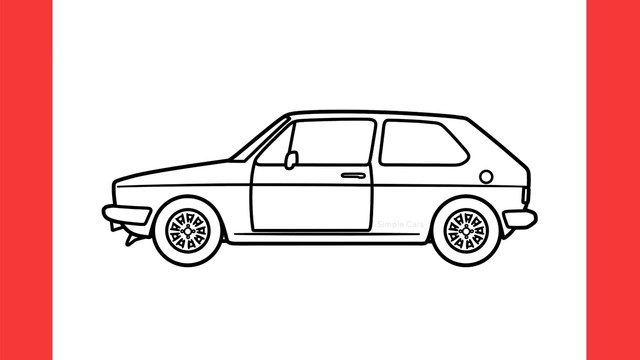
Starting with easy things to draw can make learning art feel much more comfortable. Instead of worrying about complex portraits, detailed landscapes, or advanced techniques, beginners can begin with familiar objects that use basic shapes and simple lines. A cup, leaf, flower, house, cloud, or small animal can become an excellent practice subject.
Drawing does not require expensive equipment or professional training. A pencil, eraser, paper, and a little patience are enough to begin. The important part is choosing subjects that match your current skill level while giving you opportunities to practice observation, proportion, shading, and line control.
Why Simple Drawing Ideas Are Useful for Beginners
Simple subjects help new artists understand how drawings are constructed. Many complicated pictures are actually combinations of circles, rectangles, triangles, curved lines, and other basic forms. Learning to recognize these shapes makes it easier to approach more challenging artwork later.
For example, a simple house can be created with a rectangle for the main structure and a triangle for the roof. A flower may begin with a small circle surrounded by curved petals. Even an animal can often be simplified into basic geometric forms before details are added.
This approach reduces frustration because beginners can concentrate on one skill at a time. Instead of trying to create a perfect finished illustration immediately, they can practice outlines first, then proportions, details, and finally shading.
Everyday Objects That Make Great Practice Subjects
Some of the best easy things to draw are objects already available around you. Everyday items are useful because you can observe their actual shape instead of relying entirely on imagination.
Try drawing a coffee mug, spoon, water bottle, notebook, pair of glasses, keys, headphones, or a small plant. Place one object in front of you and study its outline carefully before putting pencil to paper.
Pay attention to the relationship between height and width. Notice where curves begin and end, and look at how light falls across the surface. These observations gradually improve visual accuracy.
A simple practice routine can involve choosing one household object each day. Draw it once using only an outline, then create another version with light shading. Comparing both versions can reveal which areas need improvement.
Nature-Inspired Subjects for Relaxed Sketching
Nature provides countless subjects for beginner artists. Leaves, clouds, flowers, stones, trees, mountains, mushrooms, and simple landscapes can all be adapted to different skill levels.
Leaves are particularly useful because they encourage artists to practice curved lines and symmetry. Start with the central vein and create the outer shape around it. Once the basic outline looks right, add smaller veins and gentle shading.
Flowers also provide creative freedom. A simple daisy can be constructed from a central circle and repeated petals, while a tulip can be represented with a few curved shapes. You do not need to reproduce every detail found in nature.
Clouds are another enjoyable choice. Their irregular edges allow beginners to practice flowing lines without worrying about perfect geometry. Adding light pencil shading underneath the cloud can also introduce basic concepts of depth and contrast.
Cute and Simple Subjects to Try
If you enjoy character-style artwork, there are many easy things to draw that can be turned into cute illustrations. Small animals, cartoon faces, simple food characters, and friendly creatures are excellent choices.
A basic cat, for instance, can begin with an oval head, triangular ears, two eyes, a small nose, and curved whiskers. A simple dog can use similar principles while changing the ears, muzzle, and facial expression.
Food illustrations can be equally approachable. A slice of toast, cupcake, ice cream cone, apple, or bowl of noodles can be stylized with exaggerated shapes and expressive details.
The advantage of cute drawing styles is that they do not always require realistic proportions. This gives beginners freedom to experiment with expressions, accessories, patterns, and playful designs.
Simple Geometric Drawings
Geometric subjects are excellent for learning accuracy. Cubes, spheres, cylinders, pyramids, boxes, and cones may look basic, but they teach valuable skills related to perspective and three-dimensional form.
Start with a cube and practice drawing its visible edges. Then add light shading to separate the front, side, and top surfaces. Once you become comfortable with cubes, try combining them into objects such as buildings, robots, furniture, or simple vehicles.
Geometric exercises also help with technical drawing. When you understand how three-dimensional forms work, you can use the same principles when sketching architecture, product concepts, or detailed illustrations.
| Subject | Main Skill Practiced | Suggested Difficulty |
|---|---|---|
| Leaf | Curved lines and symmetry | Beginner |
| Mug | Ellipses and proportions | Beginner |
| House | Basic shapes and structure | Beginner |
| Apple | Curves and shading | Beginner |
| Cat face | Facial details | Beginner |
| Tree | Organic forms | Beginner |
| Cube | Perspective | Beginner |
| Simple bicycle | Shape relationships | Intermediate |
How to Turn Basic Shapes Into Drawings
One effective way to explore easy things to draw is to break every subject into smaller shapes. This technique is often called construction drawing.
Imagine drawing an apple. Rather than immediately attempting its final outline, begin with a loose circle. Adjust the top and bottom slightly, add the indentation near the stem, and then refine the contour.
For a simple bird, start with an oval body and a smaller circle for the head. Add a triangle for the beak, curved lines for the wings, and thin legs. After the construction lines are complete, erase unnecessary marks and strengthen the final outline.
This method makes drawing less intimidating because you are solving several small problems instead of one large one.
Drawing Ideas for Daily Practice
Consistency matters more than creating a complicated picture every time. A short daily sketching session can help develop hand control and visual observation.
You could create a rotating practice list such as:
- Day one: household object
- Day two: leaf or flower
- Day three: simple animal
- Day four: food illustration
- Day five: landscape
- Day six: geometric object
- Day seven: free-choice sketch
Keeping these drawings together creates a visual record of your progress. You may notice improvements in line confidence, proportions, detail, and shading after several practice sessions.
Another useful exercise is to draw the same object several times. The first attempt might look rough, but later versions can become more accurate because you already understand its structure.
Easy Sketching Techniques for Better Results
Finding easy things to draw is only part of improving your skills. The way you approach each drawing also matters.
Start with light pencil strokes rather than pressing heavily. Light lines are easier to correct and allow you to adjust proportions without damaging the paper.
Use different pressure levels to create tonal variation. Gentle pressure can produce light shadows, while stronger pressure can create darker areas. Try not to make every part of the drawing equally dark.
You can also practice contour drawing, where you focus closely on the edges of an object. Another useful exercise is negative-space drawing, which involves observing the shapes surrounding an object rather than concentrating only on the object itself.
These techniques gradually improve observation and make finished sketches more convincing.
Creative Drawing Ideas Without Copying References
While references can be useful, imagination is another important part of artistic development. Once you become comfortable with basic forms, combine familiar subjects into new ideas.
For example, combine a house with oversized flowers, create a tiny cabin inside a mountain, or design an imaginary animal using features from several real creatures. You can also invent simple characters with different hairstyles, clothing, facial expressions, and accessories.
The goal is not necessarily to create a masterpiece. Creative exercises encourage experimentation and help you discover personal preferences in style.
Keeping a small sketchbook can make this process easier. Use different pages for objects, characters, nature, patterns, and imaginary scenes. Over time, the collection can become a source of ideas whenever you are unsure what to draw.
Common Beginner Mistakes to Avoid
Beginners sometimes assume that every drawing must look perfect. This expectation can make practice unnecessarily stressful.
One common mistake is adding details before getting the main proportions correct. A beautifully shaded drawing can still look unusual if its basic structure is inaccurate. Build the shape first, then add details.
Another issue is pressing too hard with the pencil. Strong lines are difficult to erase and can make corrections messy. Keeping the initial sketch light provides much more flexibility.
It is also helpful to avoid comparing early sketches with highly finished artwork. Professional-looking illustrations often represent years of practice. Focus instead on whether today’s drawing is clearer or more controlled than yesterday’s.
How to Choose Your Next Drawing Project
When selecting easy things to draw, consider both your current ability and what genuinely interests you. If you enjoy animals, start with simplified pets or cartoon creatures. If you prefer nature, practice leaves, flowers, trees, and landscapes.
Choose subjects that can be completed within a reasonable amount of time. Finishing smaller drawings can build confidence and encourage regular practice.
As your skills develop, gradually increase the complexity. Move from a single object to multiple objects, from flat shapes to three-dimensional forms, and from simple outlines to more advanced shading.
Conclusion
Learning to draw becomes more approachable when you begin with manageable subjects. Easy things to draw can include everyday objects, nature, cute characters, food, geometric forms, and imaginative designs. Each subject provides an opportunity to practice a specific skill while keeping the creative process enjoyable.
The key is to focus on observation, basic shapes, light construction lines, proportions, and gradual detail. Regular practice is more valuable than trying to create a perfect illustration immediately. With patience and experimentation, simple sketches can become the foundation for more advanced artwork and a personal drawing style.