
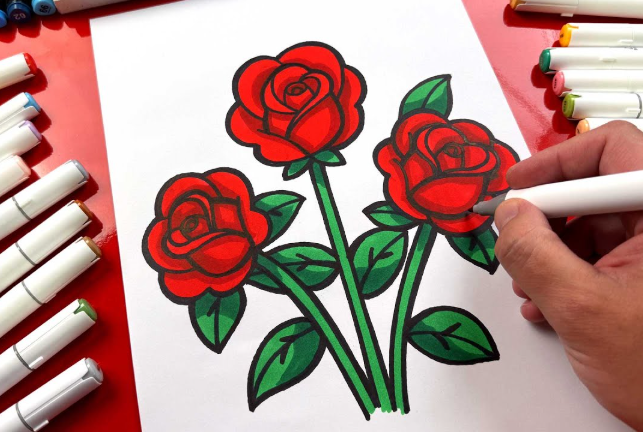
Introduction: Why Drawing Roses Feels So Special
Drawing flowers has always been one of the most calming and expressive art forms, and roses stand at the center of this creativity. Their soft curves, layered petals, and natural elegance make them both challenging and deeply satisfying to sketch. When you first begin learning how to draw a rose, it may seem complicated, but once you understand the structure, everything starts making sense.
A rose is not just a flower in art—it represents emotion, beauty, and patience. Artists across generations have practiced it as a way to improve observation skills and hand control. The good thing is, you don’t need to be a professional to start. Even a simple pencil and paper can take you far if you follow the right approach.
In this guide, we will explore every stage of sketching a rose—from understanding structure to adding realistic shading. By the end, you will feel confident enough to create your own floral artwork with ease.
Understanding the Core Structure of a Rose

Before putting pencil to paper, it’s important to observe how a rose is built. Every bloom starts from a tight center and gradually opens outward in layers.
When learning how to draw a rose, think of it as a spiral that expands into soft overlapping petals. This mental image helps you avoid confusion and keeps your sketch organized from the beginning.
A rose may look complex, but it follows a natural rhythm. The inner petals are small and tightly packed, while outer petals are larger and more relaxed. This structure is what gives the flower its depth and beauty.
The key is observation. Spend a few minutes looking at real roses or high-quality images. Notice how no two petals are identical, yet the overall shape feels balanced.
Essential Tools for Sketching a Rose
You don’t need expensive supplies to create beautiful art. In fact, simplicity often leads to better focus and creativity.
A basic pencil set, eraser, and paper are enough to start. However, different pencil grades help you achieve better shading and detail.
| Tool | Purpose | Recommended Use |
|---|---|---|
| HB Pencil | Light sketching | Initial structure |
| 2B Pencil | Medium shading | Mid-tone depth |
| 4B Pencil | Dark shading | Shadows and contrast |
| Kneaded Eraser | Soft corrections | Highlight control |
| Blending Tool | Smooth shading | Realistic finish |
When practicing how to draw a rose, focus more on technique than tools. Even basic materials can produce stunning results when used correctly.
Step-by-Step Process of Drawing a Rose
This is the most important section where everything comes together. Follow each step carefully and take your time.
Step 1: Start with the Spiral Center
Begin by drawing a small spiral in the middle of your page. This represents the core of the rose where petals are tightly packed.
Keep your hand relaxed. The spiral does not need to be perfect; in fact, slight imperfections make it look more natural.
At this stage of how to draw a rose, you are setting the foundation for the entire structure.
Step 2: Build Inner Petals
Around the spiral, start adding small curved petals. These should wrap gently around the center.
Think of them as soft folds forming around a hidden core. Keep your lines light so you can adjust them later if needed.
Step 3: Expand Outward
Now begin extending the petals outward. These outer layers should be slightly larger and more open.
Each petal should curve differently to avoid a mechanical look. Nature is irregular, and your drawing should reflect that.
Step 4: Shape the Outer Bloom
The outermost petals define the final shape of the rose. These are the widest and most expressive parts of the flower.
Let them flow naturally outward. Avoid stiff lines. This is where your sketch begins to look like a real flower.
At this point, how to draw a rose becomes clearer as the structure visually forms.
Step 5: Add Refinement Lines
Go back and refine edges, smooth curves, and adjust proportions. This is where your rose becomes more realistic.
Lightly erase unnecessary guidelines while preserving the main structure.
Adding Depth with Shading Techniques
Shading is what brings your drawing to life. Without it, even a well-drawn rose can appear flat and incomplete.
Understanding Light Direction
Decide where your light source is coming from. This will guide where shadows and highlights fall.
Areas closer to light remain bright, while opposite sides become darker.
This step is essential when mastering how to draw a rose realistically.
Layered Pencil Shading
Start lightly and gradually build darker tones. This layered approach gives depth to petals.
Avoid pressing too hard in the beginning. Control is more important than intensity.
Blending for Smooth Texture
Use a blending stump or tissue to soften pencil strokes. This creates a realistic, silky petal texture.
However, do not over-blend, or you may lose detail and contrast.
Common Mistakes Beginners Make
Many beginners struggle with similar issues when learning floral sketches. Here are some important ones to avoid:
- Making all petals identical in shape
- Using heavy outlines too early
- Ignoring light source direction
- Over-shading without structure
- Rushing the sketching process
When practicing how to draw a rose, patience is more valuable than speed. Every line contributes to the final result.
Comparison: Simple Sketch vs Realistic Drawing
| Feature | Basic Sketch | Realistic Drawing |
|---|---|---|
| Detail Level | Low | High |
| Time Required | 10–15 minutes | 45–90 minutes |
| Shading | Minimal | Layered & detailed |
| Depth | Flat | 3D appearance |
| Skill Level | Beginner | Intermediate/Advanced |
This comparison shows how effort and technique transform a simple outline into a lifelike artwork.
Advanced Techniques for Better Results

Once you are comfortable with basics, you can explore more advanced techniques.
Petal Texture Detailing
Add fine lines inside petals to show natural folds. This enhances realism significantly.
Contrast Control
Use darker tones near the center and lighter tones on outer petals. This creates a natural depth effect.
Edge Softening Technique
Not all edges should be sharp. Soft edges make petals look more natural and delicate.
At this stage, how to draw a rose becomes more about artistic expression than just structure.
Practice Routine for Improvement
Consistency is the key to mastering any skill. Even short daily practice sessions can lead to major improvement.
Try sketching different rose angles each day. Focus on speed one day and detail the next.
Observe real flowers whenever possible. This improves your visual understanding of shapes and curves.
Why Observation Matters in Art
Drawing is not just about hand movement—it is about seeing correctly. The better you observe, the better you draw.
Spend time studying how light interacts with petals. Notice shadows, overlaps, and natural irregularities.
This habit will dramatically improve your understanding of how to draw a rose in a realistic way.
FAQs
1. Is drawing a rose difficult for beginners?
No, it becomes easy once you understand the basic spiral structure and petal layering.
2. What pencil is best for shading roses?
2B and 4B pencils are ideal for creating smooth and dark shading effects.
3. How long does it take to learn rose drawing?
With regular practice, noticeable improvement comes within 1–2 weeks.
4. Why do my roses look flat?
This usually happens due to lack of shading or incorrect light placement.
5. Can I draw a rose without shading?
Yes, but shading is essential for realism and depth.
6. What is the easiest way to start?
Start with a spiral center and slowly build petals outward.
7. Do I need art training to improve?
No, consistent practice and observation are enough.
Conclusion: Your Journey with Rose Drawing
Learning floral sketching is a gradual and rewarding journey. The beauty of art lies not in perfection but in progress and expression.
Once you understand structure, shading, and layering, drawing becomes much more natural and enjoyable. Every attempt improves your control and creativity.
Mastering how to draw a rose is about patience, observation, and continuous practice. Start simple, stay consistent, and gradually challenge yourself with more detail and realism.
Keep your sketchbook close, draw regularly, and enjoy the process of bringing flowers to life on paper.