
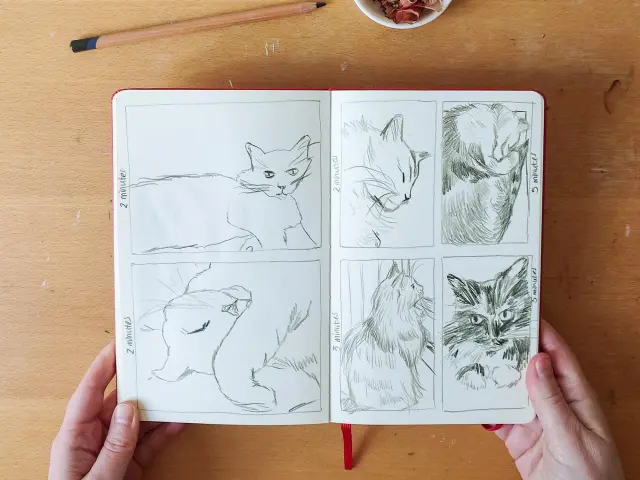
Drawing becomes easier and more enjoyable when you have the right subjects to practice. Whether you are a complete beginner or someone trying to develop better artistic control, choosing interesting things to draw can make each practice session more productive. Simple objects, nature scenes, characters, patterns, and everyday surroundings can all become useful drawing exercises.
The best practice subjects do not always need to be complicated. A coffee mug can teach you about curves and proportions, while a tree can help you understand texture and organic shapes. By gradually moving from simple sketches to more detailed compositions, you can improve observation, hand control, shading, and creativity without feeling overwhelmed.
Why Choosing the Right Things to Draw Matters
A good drawing subject gives you an opportunity to focus on a particular skill. Beginners often make the mistake of choosing highly detailed subjects before developing basic techniques. Starting with manageable objects allows you to understand shape, proportion, perspective, and light more comfortably.
For example, drawing a simple apple can help you study rounded forms and shadows. Sketching a shoe introduces more complex contours and overlapping shapes. As your confidence grows, you can combine several objects into a still-life composition.
Another advantage is motivation. When you enjoy what you are drawing, practicing regularly feels less like a task. Creative subjects can encourage experimentation and help you discover the styles and themes that interest you most.
Easy Things to Draw for Beginners
If you are new to sketching, begin with familiar objects that have recognizable shapes. Household items are especially useful because you can observe them directly instead of relying entirely on photographs.
Some approachable subjects include:
- Cups, bottles, books, glasses, and simple kitchen objects
- Leaves, flowers, clouds, and small plants
- Shoes, bags, hats, and everyday accessories
- Simple geometric patterns and decorative shapes
When working on these subjects, concentrate on basic outlines first. Avoid adding too much detail immediately. Once the proportions look correct, introduce shadows, textures, and smaller features.
A useful exercise is to draw the same object from several angles. This teaches you how its appearance changes when viewed from different positions and improves your understanding of three-dimensional form.
Creative Things to Draw From Everyday Life
Your surroundings can provide an almost unlimited collection of drawing subjects. Look around your home, neighborhood, classroom, workplace, or garden and choose something that catches your attention.
A desk setup, for instance, can become a complete sketch. You might draw a laptop, notebook, headphones, pen holder, and cup together. This exercise teaches composition because you must decide where each object belongs on the page.
You can also sketch people performing ordinary activities, such as reading, walking, cooking, or working. Quick gesture sketches are particularly useful for understanding movement and body proportions.
Another effective idea is to keep a small sketchbook nearby and record interesting objects or scenes throughout the day. These quick drawings do not need to be perfect. Their purpose is to train your eyes to notice shapes, relationships, and visual details.
Nature-Inspired Drawing Ideas
Nature is one of the richest sources of artistic inspiration. Leaves, flowers, trees, stones, shells, insects, birds, and landscapes offer different levels of complexity and allow you to practice both structure and texture.
A single leaf is an excellent starting point. Observe its central vein, outer edges, folds, and changes in tone. Once comfortable, try drawing several leaves with different shapes.
Landscapes can provide a more advanced challenge. Start by separating the scene into foreground, middle ground, and background. Use lighter details in distant areas and stronger lines or textures in the foreground to create depth.
Trees are also valuable practice subjects because their branches and foliage can be simplified into basic forms. Instead of attempting every leaf, focus on the overall silhouette and major branch structures.
Fun Things to Draw When You Want to Experiment
Creative practice does not always have to be realistic. Imagination-based sketching can help you explore visual storytelling and develop an individual style.
You could combine familiar objects in unusual ways. Imagine a house inside a giant teacup, a floating library, or a bicycle with wings. These concepts encourage you to think about scale, perspective, shape relationships, and visual narrative.
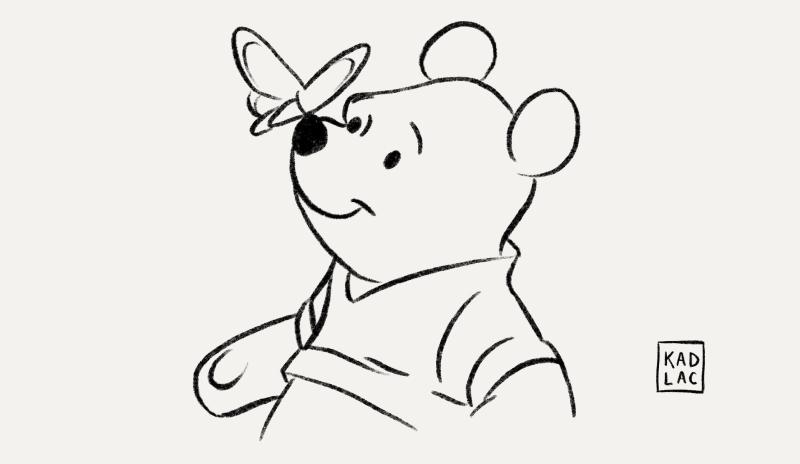
Character design is another enjoyable option. Start with basic body shapes and experiment with hairstyles, clothing, facial expressions, and accessories. Creating several versions of the same character can teach you how small changes influence personality.
You can also create fantasy creatures by combining characteristics from real animals. For example, the body of a fox could be combined with the wings of a bird and the tail of a fish. The goal is not scientific accuracy but creative exploration.
Drawing Ideas for Practicing Different Skills
Different subjects are useful for different drawing techniques. Instead of randomly selecting a subject every day, match your practice to the skill you want to improve.
| Drawing Subject | Main Skill | Suggested Practice |
|---|---|---|
| Fruit and simple objects | Proportion | Compare height, width, and curves |
| Leaves and flowers | Line control | Follow natural contours |
| Shoes and bags | Form | Study overlapping shapes |
| Faces | Anatomy | Practice facial proportions |
| Buildings | Perspective | Use horizontal and vertical guides |
| Landscapes | Depth | Separate foreground and background |
| Fabric | Texture | Study folds and light |
| Animals | Gesture | Capture movement with quick sketches |
This approach makes drawing practice more purposeful. If your proportions need improvement, choose objects with clear shapes. If shading is your weakness, select subjects with a strong light source and visible shadows.
Things to Draw to Improve Shading and Light
Shading can transform a flat outline into a convincing three-dimensional drawing. To practice it effectively, choose objects with simple forms and place them under a single light source.
Spheres, cylinders, cubes, fruit, bottles, and folded fabric are excellent exercises. Observe where the light hits the object, where the darkest shadow appears, and how the cast shadow falls onto the surface below.
Try using different pressure levels with your pencil. Light pressure creates pale tones, while heavier pressure produces darker areas. Gradually building layers often gives you better control than pressing hard immediately.
You can also practice cross-hatching, stippling, blending, and directional strokes. Each method creates a different visual texture, so experimenting with them can help you understand which techniques suit your preferred style.
Things to Draw When You Are Bored
When you do not know what to sketch, choose a simple creative challenge instead of waiting for inspiration. Drawing random objects from memory is one option. Another is to select a word and create a small illustration around it.
Try drawing a collection based on a theme, such as travel, food, space, school, or animals. You can also fill a page with tiny sketches rather than spending an entire session on one large drawing.
A useful challenge is to draw one object in five different styles. You might create a realistic version, a cartoon version, a minimal outline, a geometric interpretation, and an exaggerated version. This develops flexibility and encourages you to think beyond conventional representations.
How to Turn Simple Subjects Into Better Drawings
Even basic subjects can become impressive when you pay attention to composition and presentation. Start by deciding where the subject will sit on the page. Avoid placing every object automatically in the center.
Think about negative space, scale, overlapping elements, and the direction of visual movement. For example, a simple cup can become more interesting when placed beside an open book with a cast shadow extending across the table.
Details should support the overall form rather than distract from it. Add texture only after the major shapes and proportions are working. This layered approach makes your drawings cleaner and easier to develop.
Taking reference photos of your own surroundings can also help. You can return to them later when natural lighting or time is unavailable.
Building a Consistent Drawing Practice
Improvement comes from regular practice rather than trying to create a perfect drawing every time. Set aside a manageable amount of time and give each session a specific goal.
One day could focus on line quality, another on perspective, and another on shading. You might spend a later session creating a complete composition using several skills together.
Keep older sketches so you can compare them with newer work. Looking back helps you recognize changes in confidence, accuracy, and technique that may not be obvious from day to day.
Do not erase every imperfect line. Some mistakes are useful because they reveal where your technique needs attention. Learning to identify and correct those problems is an important part of artistic development.
Creative Things to Draw With Different Materials
Experimenting with materials can change how you approach a subject. Pencils are useful for controlled shading and detailed sketches, while colored pencils can introduce layering and color relationships.
Ink encourages confident line work because mistakes are more difficult to hide. Markers are useful for bold shapes and graphic illustrations, while charcoal can produce dramatic values and expressive textures.
You do not need expensive supplies to experiment. A basic pencil and ordinary paper are enough for developing fundamental skills. The important factor is how intentionally you observe and practice.
Conclusion
Finding interesting things to draw can make artistic practice more enjoyable while helping you develop practical skills. Simple household objects can improve proportion, nature subjects can develop observation, landscapes can strengthen perspective, and imaginative concepts can encourage creativity.
The key is to choose subjects that match your current ability while occasionally introducing a new challenge. Practice outlines before details, forms before textures, and observation before decoration. With consistent sketching and a willingness to experiment, even ordinary subjects can become valuable opportunities for artistic growth.