

Introduction
Drawing is one of the most accessible and rewarding hobbies anyone can pick up. Whether you are picking up a pencil for the first time or looking to fill your sketchbook with quick, satisfying sketches, starting with easy things to draw makes all the difference. Simple subjects build confidence, teach fundamental skills, and turn blank pages into personal creations without overwhelming pressure.
In this guide, you will find plenty of inspiration, practical advice, and step-by-step suggestions tailored for newcomers. Drawing everyday objects, nature elements, and cute doodles helps you practice observation, proportions, and basic shading while having fun. The best part? You only need minimal supplies and a few minutes a day to see real progress.
Why Start with Easy Drawing Ideas?
Beginning with straightforward subjects removes intimidation and focuses on building core skills. Complex scenes can frustrate new artists, but simple shapes like circles, lines, and ovals form the foundation of almost everything. Breaking objects into basic forms makes drawing feel achievable and enjoyable.
Regular practice brings multiple benefits:
- Improves focus and memory: Even short doodling sessions sharpen attention and help retain information better.
- Reduces stress: Drawing acts like a gentle meditation, lowering tension and boosting mood.
- Builds hand-eye coordination and creativity: Consistent sketching strengthens fine motor skills and encourages problem-solving.
- Boosts confidence: Seeing your own improvement over time feels incredibly motivating.
Many people discover that daily 10-20 minute sessions yield faster progress than occasional long efforts. Keep your early drawings—even the imperfect ones—to track growth.
Essential Materials for Beginners

You do not need expensive tools to begin. Start simple and upgrade as you grow.
- Pencils: An HB or No. 2 pencil works for most sketches. Add softer B grades (2B, 4B) for darker lines and shading.
- Paper: Any notebook or printer paper suffices at first. Sketchbooks with smooth or lightly textured pages feel nicer for practice.
- Eraser: A soft kneaded eraser lifts lines gently without damaging paper.
- Optional extras: Colored pencils for adding life, a small sharpener, and a ruler for straight lines or guidelines.
Keep supplies portable so you can draw anywhere—on a lunch break, while watching TV, or during a quiet evening.
Basic Drawing Techniques to Master Early
Focus on these foundational approaches before diving into detailed subjects:
- Start with basic shapes: Every object breaks down into circles, ovals, rectangles, triangles, and lines. Lightly sketch these first as a framework.
- Draw lightly: Use gentle pressure for construction lines. Darken final outlines later and erase guides easily.
- Observe carefully: Draw what you actually see rather than what you think an object should look like. Use real references like photos or items around you.
- Practice line variation: Press harder for bold outer edges and lighter for inner details to add depth.
- Simple shading: Try hatching (parallel lines), cross-hatching, or stippling (dots) for texture and shadows.
These techniques apply across all easy drawing ideas and help your sketches look more polished quickly.
Easy Things to Draw: Everyday Objects
Household items make excellent starting points because they sit right in front of you.
- Coffee mug or cup: Begin with an oval for the top, a cylinder for the body, and a curved handle. Add steam lines for charm.
- Stack of books: Draw rectangles of varying sizes stacked unevenly. Add spine details and slight shadows.
- Keys on a keyring: Simple ovals and straight lines form the keys. Practice different shapes and angles.
- Candle: A tall rectangle or cylinder with a flame on top. Experiment with wax drips for interest.
These objects teach proportions and basic perspective in a low-pressure way.
Nature and Plant Ideas That Feel Relaxing
Nature subjects offer organic shapes that forgive small mistakes.
- Flowers: Daisies start with a central circle and oval petals. Tulips use cup-like shapes with stems. Sunflowers combine large circles with radiating petals.
- Trees: Trunk as two curved lines, foliage as cloud-like clusters of circles or scribbles. Bare branches work great for winter scenes.
- Leaves: Pick one real leaf and trace its veins lightly before outlining.
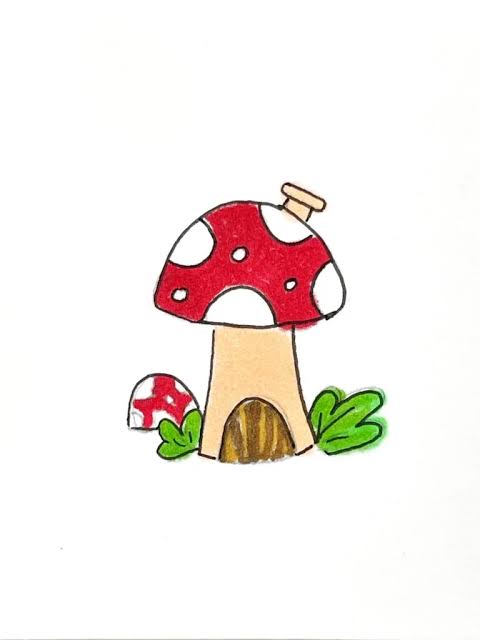
- Mushrooms: Rounded caps on simple stalks. Add spots or grass at the base for a whimsical touch.
Bullet points for quick nature sketches:
- Single daisy or small bouquet
- Potted succulent or cactus
- Seashell with spiral details
- Simple cloud formations
Fun Food and Treat Drawings
Food items are colorful, approachable, and satisfying to sketch.
- Fruits: Banana as a curved shape, apple as a sphere with a small dent, bunch of grapes as overlapping circles.
- Donuts and cupcakes: Two circles for the donut (with sprinkles), trapezoid base with swirls for cupcakes.
- Ice cream cone: Triangle cone topped with rounded scoops.
These make great practice for textures and shading—try adding highlights on shiny surfaces.
Cute Animals for Beginners

Animals build personality with minimal lines once simplified.
- Cat face: Circle head, triangle ears, dot eyes, and whisker lines.
- Bird: Oval body, smaller circle head, beak triangle, and simple wings.
- Sleeping dog or bunny: Soft curves for bodies and floppy ears.
Start with faces or silhouettes before full bodies.
More Creative and Doodle-Style Ideas
- Hearts, stars, and arrows in different styles and patterns.
- Simple faces or emojis with varied expressions.
- Mandala patterns: Start from a center point and repeat symmetrical shapes outward.
- Your hand or shoes: Everyday self-portrait practice.
Additional easy prompts:
- A single leaf or feather
- Pair of glasses
- Phone or keys
- Crescent moon with stars
- Basic landscape with hills, sun, and tree
Step-by-Step Example: How to Draw a Simple Flower
- Lightly draw a small circle for the center.
- Add oval or teardrop petals around it, overlapping slightly.
- Sketch a straight or gently curved stem.
- Add a couple of leaves with central veins.
- Darken outlines and add light shading or color.
Repeat variations—different petal counts or angles—to build confidence fast.
Tips for Consistent Progress and Enjoyment
- Draw daily for short periods rather than long infrequent sessions.
- Fill pages completely instead of aiming for single perfect sketches.
- Experiment with angles and lighting on the same object.
- Join online communities or share with friends for gentle feedback (optional).
- Date your work and review old pages to appreciate growth.
Avoid perfectionism. The goal is exploration and joy, not museum-quality pieces right away.
Common Challenges and How to Overcome Them
New drawers often worry about proportions or shaky lines. Remember: light construction lines fix most issues. If something feels off, step back, compare to your reference, and adjust. Practice the same subject multiple times—repetition builds muscle memory quickly.
Another tip: use timers (5-10 minutes) to keep sessions pressure-free and productive.
Expanding Your Skills Over Time
Once comfortable with easy things to draw, combine elements—add a flower to a mug still life or place animals in simple landscapes. Try different tools like colored pencils or pens for variety.
Many artists keep themed sketchbook pages: one for food, another for nature, and one for doodles. This keeps motivation high and skills balanced.
Conclusion
Exploring easy things to draw opens a world of creativity accessible to everyone. From a humble coffee cup to cheerful daisies or playful cat faces, each sketch teaches something new while bringing calm and satisfaction. Gather basic supplies, pick one idea from this list, and start today. Your first drawings may feel simple, but they mark the beginning of a fulfilling artistic journey filled with small victories and growing confidence.