
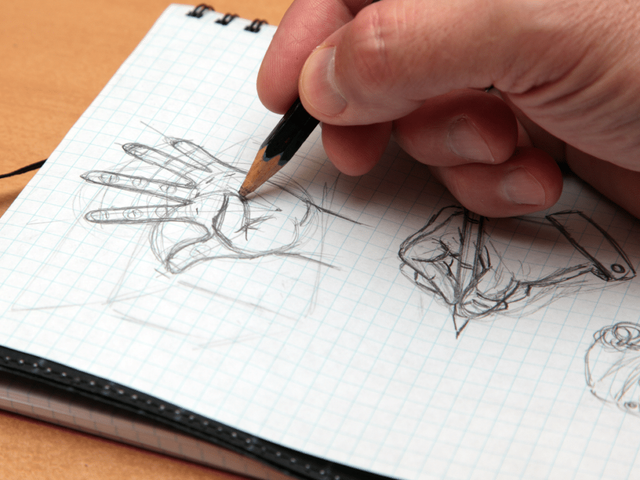
Drawing does not always require advanced skills, expensive supplies, or years of practice. Some of the most enjoyable sketches begin with basic shapes, familiar objects, and small creative details. Whether you are holding a pencil for the first time or looking for a relaxing activity, easy things to draw can help you practice lines, shapes, proportions, shading, and observation without making the process feel complicated.
A simple drawing can also become a starting point for a more detailed illustration. A circle can turn into a face, a few curved lines can become a leaf, and basic geometric shapes can form an entire house or character. The key is to choose subjects that match your current skill level and gradually add complexity.
Why Simple Drawings Are Good for Beginners
Beginning with straightforward subjects makes it easier to understand the fundamentals of drawing. Instead of worrying about complicated anatomy, perspective, or realistic textures, beginners can concentrate on controlling the pencil and creating clean outlines.
Simple sketches are also useful for developing hand-eye coordination. Repeatedly drawing circles, curves, squares, leaves, clouds, and everyday objects helps the hand become more comfortable with different movements. Over time, these basic exercises make more complicated illustrations easier to approach.
Another advantage is that small drawings can be completed quickly. Finishing a sketch in a few minutes can provide a sense of progress and encourage regular practice. This is particularly useful for people who want a creative hobby but do not have a lot of free time.
Cute and Fun Ideas to Try
Cute subjects are popular because they can be simplified without losing their recognizable features. A small animal, smiling food item, or cartoon-style object can be created with circles, ovals, and simple curves.
For example, a beginner can sketch a round cat face with triangular ears, two large eyes, a tiny nose, and curved whiskers. A cupcake can be represented with a curved frosting shape above a rectangular wrapper. Adding tiny expressions can make these drawings feel more personal.
Other playful subjects include stars, moons, mushrooms, balloons, little ghosts, cartoon clouds, and miniature plants. These are excellent easy things to draw when the goal is to experiment with imagination rather than perfect realism.
Nature-Inspired Sketches
Nature provides an almost unlimited collection of subjects for artists. Leaves, flowers, mountains, trees, clouds, shells, and simple landscapes can all be reduced to basic shapes.
A leaf is a particularly useful practice subject. Start with a curved central line and create two sides around it. Small veins can then be added using short strokes. Once the outline looks comfortable, experiment with different leaf shapes and textures.
Flowers are equally flexible. A basic flower can begin with a small circle in the center and several rounded petals surrounding it. Changing the number, size, and shape of the petals creates completely different results.
For a slightly larger project, try a simple landscape containing mountains, a sun, a few clouds, and foreground grass. This introduces composition while keeping the individual elements manageable.
Everyday Objects as Drawing Practice
You do not need unusual subjects to improve your skills. Objects around your home can become excellent drawing exercises because you can observe them directly.
A coffee mug, pencil, book, pair of glasses, houseplant, bottle, spoon, or pair of headphones can be sketched using simple geometric forms. A mug, for instance, can start with an oval for the opening, two curved sides, and another curved line for the base.
Drawing familiar objects also teaches observation. Rather than relying entirely on imagination, you begin noticing proportions, shadows, angles, and overlapping shapes. This habit becomes increasingly valuable as your artistic ability develops.
The following table gives a range of subjects and the main skill each one can help develop:
| Drawing Subject | Main Skill Practiced | Suggested Difficulty |
|---|---|---|
| Leaf | Curved lines and details | Beginner |
| Mug | Basic perspective | Beginner |
| Cloud | Organic shapes | Beginner |
| House | Geometric forms | Beginner |
| Eye | Proportion and shading | Intermediate |
| Simple tree | Texture and composition | Beginner |
| Cat face | Symmetry and expression | Beginner |
| Mountain scene | Composition and layering | Beginner |
| Sneaker | Perspective and contour | Intermediate |
| Simple portrait | Facial proportions | Intermediate |
Doodles for Quick Creative Practice
Doodling is one of the easiest ways to keep your creativity active. Unlike formal drawing exercises, doodles do not need to represent a realistic object. You can combine patterns, symbols, shapes, and small illustrations on the same page.
Try filling a notebook with stars, spirals, arrows, hearts, flowers, geometric patterns, tiny faces, or abstract shapes. You can also create borders around pages or design repeating patterns.
One useful approach is to choose a theme for each page. A food-themed doodle page could include pizza slices, ice cream, fruit, cups, and cookies. A travel page might feature airplanes, cameras, maps, luggage, and landmarks.
Because doodles are usually small, they make excellent easy things to draw during short breaks or when you want to practice without committing to a large illustration.
Simple Cartoon Characters
Cartoon characters can look complicated, but beginners can simplify them into a few recognizable components. Start with the head shape, then add basic facial features and a simple body.
Focus on expressions rather than intricate details. Changing the position of the eyebrows and mouth can make the same character appear happy, surprised, tired, or confused.
You can also create original characters instead of copying existing ones. Give a character a distinctive hairstyle, hat, glasses, outfit, or facial expression. This turns a basic drawing exercise into a small character-design project.
When practicing easy things to draw, cartoon figures are especially useful because they teach you how small changes can communicate personality and emotion.
Geometric Drawings and Patterns
Geometric art is another approachable area for beginners. Squares, triangles, circles, hexagons, lines, and grids can be combined to produce attractive designs.
Try creating a page divided into several sections and fill each section with a different pattern. One area might contain parallel lines, another concentric circles, and another alternating triangles.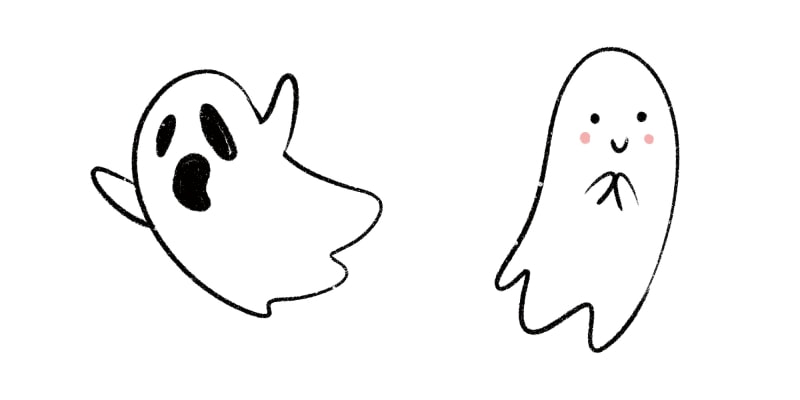
You can also experiment with optical-style patterns by repeating shapes at consistent intervals. These exercises improve precision and patience while giving you a finished artwork that looks more sophisticated than the individual components suggest.
How to Make Basic Drawings Look Better
A simple drawing does not have to remain flat or plain. A few small improvements can significantly change its appearance.
First, vary your line weight. Some outlines can be darker while interior details remain lighter. This creates visual hierarchy and makes important parts stand out.
Second, introduce basic shading. Decide where your imaginary light source is located and shade the opposite side of the object. Even simple cross-hatching or soft pencil shading can create a stronger sense of depth.
Third, pay attention to spacing. Leaving some empty space around the subject can make the composition cleaner. You do not need to fill every part of the page.
Finally, avoid erasing every imperfect line immediately. Small irregularities are a normal part of sketching, and excessive erasing can make the process frustrating.
Ideas for Kids and Family Drawing Sessions
Drawing can be an enjoyable shared activity for children and adults. Instead of focusing on artistic perfection, choose subjects that encourage imagination.
Ask everyone to draw the same basic object and then compare how differently each person interprets it. Another fun activity is to draw an imaginary creature by combining features from different animals.
You can also create a drawing challenge where each person chooses three random objects and combines them into one illustration. A fish with wings, a house on wheels, or a tree growing from a cloud can become fun creative prompts.
For younger children, large shapes and familiar objects are generally easier to manage than highly detailed subjects. The objective should be exploration, confidence, and enjoyment.
Using Drawing Prompts to Build a Routine
Having a list of prompts can make regular practice easier. Instead of spending several minutes deciding what to sketch, choose one subject and begin immediately.
A useful routine could involve five minutes of warm-up lines, ten minutes of drawing, and a few minutes reviewing what worked well. Keep older sketches so you can compare them with future attempts.
You can also organize prompts by theme:
- Food: fruit, cookies, sandwiches, cups, and desserts.
- Animals: cats, fish, birds, turtles, and rabbits.
- Nature: flowers, leaves, trees, mountains, and clouds.
- Objects: books, lamps, shoes, bags, and stationery.
This approach turns easy things to draw into a structured practice system rather than a collection of random sketches.
Choosing the Right Materials
You can start drawing with very little equipment. A regular pencil, eraser, sharpener, and sketchbook are enough for basic practice. Colored pencils, markers, pens, or digital drawing tools can be introduced later.
Different materials produce different effects. Graphite pencils are useful for outlines and shading, while fine-tip pens create clean line drawings. Colored pencils allow you to explore blending and color combinations.
The most important factor is not the price of the equipment but how consistently you use it. Regular practice with simple materials can be more valuable than owning a large collection of unused art supplies.
Turning Simple Sketches Into Finished Art
Once you are comfortable with basic subjects, combine several drawings into one scene. A single tree can become part of a landscape. A simple house can be placed beside a road, fence, and clouds. Several small cartoon characters can become a complete story.
This process teaches composition and storytelling. You begin thinking about how objects relate to one another rather than treating every drawing as an isolated subject.
Another option is to redraw an old sketch after several weeks of practice. Comparing the two versions can reveal improvements in proportion, line control, shading, and confidence.
The best easy things to draw are often those that can grow with your ability. Start with a simple outline, then add texture, color, shadows, and background elements as your skills improve.
Conclusion
Simple drawing is an accessible creative activity that can benefit beginners, children, hobby artists, and anyone who wants a relaxing way to practice creativity. Everyday objects, nature subjects, cute characters, doodles, patterns, and basic landscapes provide countless opportunities to develop fundamental skills.
The goal is not to make every sketch perfect. Consistent practice, observation, experimentation, and patience are more important. By starting with easy things to draw, you can gradually become comfortable with shapes, proportions, shading, composition, and visual storytelling. As confidence grows, those basic sketches can become more detailed illustrations and original artwork.