

Finding the right subject can make drawing more enjoyable, especially when you want to practice but do not know what to put on paper. A simple idea can become a detailed sketch, a character study, a landscape, or an imaginative illustration with the right approach. Exploring different things to draw also helps artists develop observation, proportion, shading, composition, and creative thinking.
Drawing does not always require advanced artistic skills. Everyday objects, plants, animals, faces, buildings, and imaginary scenes can all become useful subjects. Beginners can start with simple shapes, while experienced artists can add perspective, texture, lighting, and expressive details.
The best drawing practice combines subjects that are comfortable with ideas that introduce a small challenge. This approach keeps practice interesting while gradually improving artistic ability.
Simple Everyday Subjects for Drawing Practice
Ordinary objects around your home can provide excellent drawing references. A coffee mug, pair of glasses, houseplant, notebook, shoe, bottle, lamp, or set of keys can be sketched using basic geometric forms.
For example, a mug can begin as an oval and a cylinder. Once the basic structure is correct, you can add the handle, shadows, reflections, and surface texture. This method teaches you to look at objects as combinations of circles, rectangles, cylinders, and other forms.
Here are a few easy subjects to consider:
- Books arranged in different positions
- A favorite cup or water bottle
- Shoes with visible laces and folds
- Indoor plants and individual leaves
- Desk accessories and stationery
Working from real objects also improves observation because you can examine their proportions and details directly instead of relying entirely on memory.
Nature-Inspired Ideas for Artists
Nature offers almost unlimited drawing opportunities. Leaves, flowers, trees, mountains, clouds, shells, rocks, and landscapes can all be interpreted in different artistic styles. Natural subjects are particularly useful for practicing lines, organic shapes, texture, and light.
A single leaf can become a detailed botanical study. A collection of leaves can form a decorative composition. Similarly, a tree can be drawn as a simple silhouette or developed into a realistic scene with branches, bark, foliage, and atmospheric depth.
Flowers are another flexible choice. Beginners can focus on the overall shape, while advanced artists can study overlapping petals, delicate shadows, and subtle variations in texture.
Landscape drawing can also combine multiple skills. Try creating a scene with a foreground object, a middle-ground subject, and distant scenery. This introduces the basic concept of depth and perspective without requiring an overly complicated composition.
Animals and Pets to Sketch
Animals are among the most engaging subjects for artists because their bodies contain recognizable shapes and interesting textures. Cats, dogs, birds, rabbits, horses, and other animals can be simplified into basic forms before details are added.
When drawing an animal, begin with its overall body position rather than immediately focusing on facial features. Identify the head, torso, legs, and major joints. Then refine the silhouette and add smaller characteristics such as ears, eyes, fur patterns, claws, or feathers.
Pets are especially useful references because you can observe their movements and expressions. Instead of drawing the same standing pose repeatedly, experiment with sleeping, running, sitting, stretching, or looking in different directions.
Animal sketches can also help artists understand gesture drawing. Quick studies lasting only a few minutes can capture movement and posture without requiring a finished illustration.
People, Faces, and Character Sketches
Human subjects provide valuable practice for proportion, expression, anatomy, and gesture. If realistic portraits seem difficult, start with individual features such as eyes, noses, lips, ears, or hairstyles.
Once you become comfortable with individual features, combine them into simple face studies. Try drawing the same face from the front, side, and three-quarter views. This helps you understand how facial proportions change with perspective.
Character design adds another creative dimension. You can invent personalities through clothing, hairstyles, posture, accessories, and facial expressions. A character does not need complicated details to feel distinctive.
Some useful character exercises include:
- Designing a character based on a specific occupation
- Creating different outfits for one character
- Drawing several facial expressions
- Developing fantasy or science-fiction characters
- Sketching characters in different poses
These exercises combine imagination with technical drawing skills and can eventually support illustration, comics, animation, and concept art.
Objects That Help Improve Perspective
Perspective becomes easier when you practice with subjects that have clear edges and surfaces. Buildings, furniture, streets, vehicles, boxes, bookshelves, and rooms are useful examples.
Start with simple one-point perspective. Draw a road, hallway, or row of objects that appears to move toward a single vanishing point. After becoming comfortable with this setup, explore two-point perspective using buildings, boxes, and furniture.
Perspective practice teaches you how size and position change according to distance. It also makes drawings feel more convincing and structured.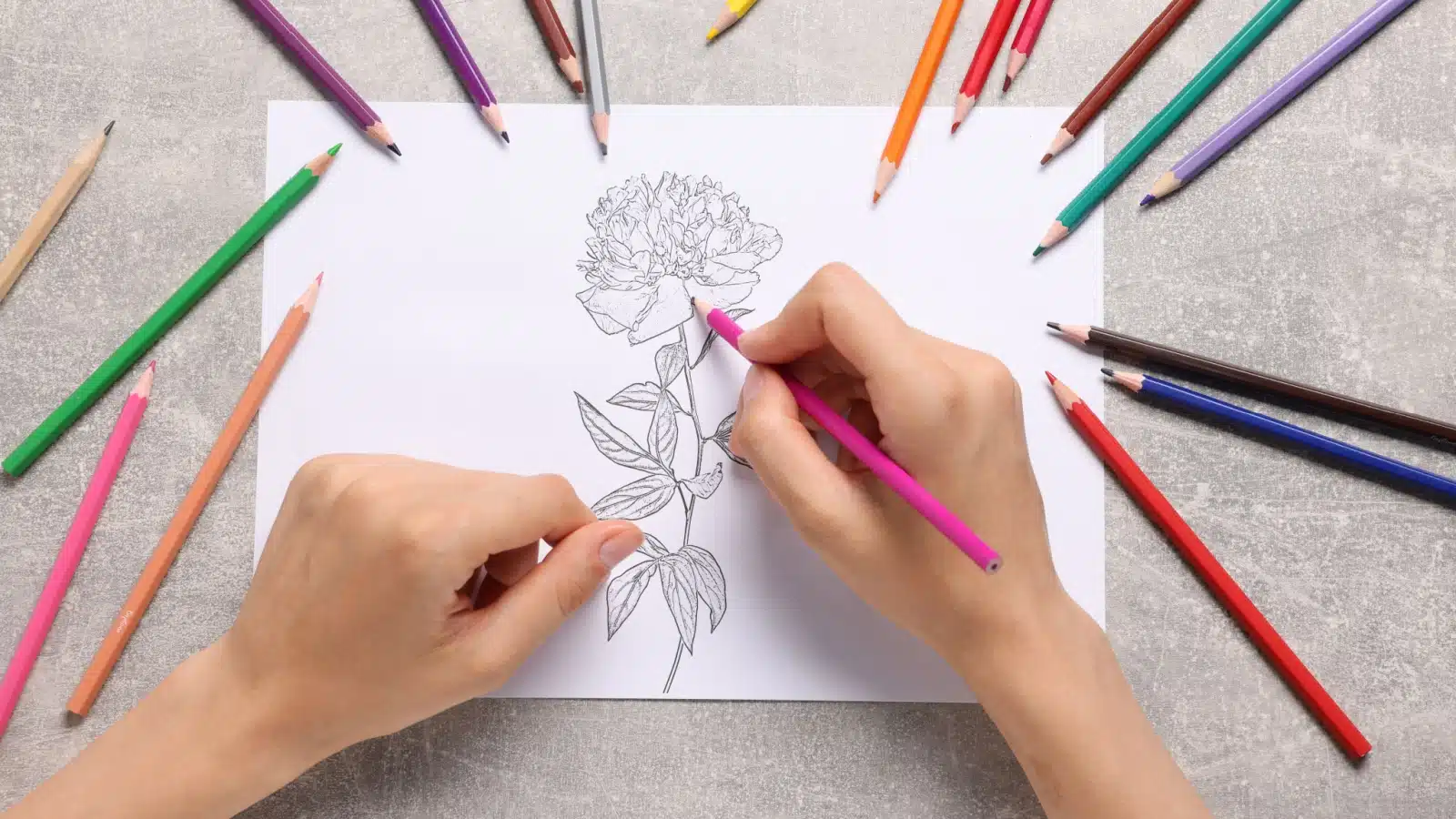
Vehicles can be challenging because of their curved surfaces, but they are useful for developing construction skills. Begin with simplified forms before adding wheels, windows, lights, and other details.
Imaginative Scenes and Fantasy Concepts
Drawing does not have to reproduce something that already exists. Imagination can be a powerful source of artistic ideas. Create floating islands, mysterious forests, futuristic cities, underwater kingdoms, magical libraries, unusual houses, or invented creatures.
Combining unrelated concepts can generate interesting compositions. For example, imagine a small house inside a giant tree or a train traveling through a city built above the clouds. These concepts encourage you to think about scale, environment, storytelling, and visual design.
A useful method is to begin with a written concept. Decide where the scene takes place, what the main subject is, and what atmosphere you want to create. Then create several small thumbnail sketches before developing the final drawing.
Choosing Subjects Based on Your Skill Level
Different drawing subjects are suitable for different stages of development. Beginners may benefit from recognizable forms and uncomplicated compositions, while intermediate artists can introduce perspective and detailed textures. Advanced artists can combine multiple subjects into complex scenes.
| Skill Level | Suitable Subjects | Main Skills |
|---|---|---|
| Beginner | Cups, leaves, books, simple animals | Lines, shapes, proportions |
| Intermediate | Faces, buildings, plants, vehicles | Perspective, shading, texture |
| Advanced | Crowded scenes, portraits, fantasy environments | Composition, anatomy, lighting |
The goal is not to remain within one category. Moving between easy and challenging subjects can prevent frustration while still creating opportunities for improvement.
How to Turn One Idea Into Many Drawings
One of the easiest ways to build a consistent practice routine is to use one subject in several different ways. A single flower, for example, can be drawn from multiple angles, enlarged into a close-up, placed in a vase, or incorporated into a larger landscape.
The same approach works with people, animals, buildings, and household objects. Change the viewpoint, lighting, size, medium, or setting to create a completely different result.
You can also experiment with pencil shading, ink outlines, colored pencils, charcoal, markers, or digital brushes. Changing the medium can reveal new aspects of the same subject and make familiar things to draw feel fresh again.
Ways to Make Drawing Practice More Consistent
Creative improvement usually comes from regular practice rather than waiting for inspiration. Set aside a manageable amount of time and choose subjects that are interesting enough to hold your attention.
Keep a sketchbook or digital folder where you can save unfinished studies. Reviewing older work can reveal changes in line confidence, proportion, shading, and composition.
Another useful strategy is to alternate between observation and imagination. Spend one session drawing a real object, then use that experience to create an imaginary version. For example, after studying a real bird, design a fictional bird with different wings, colors, and proportions.
When you run out of things to draw, use simple prompts such as “something round,” “a quiet room,” “an object from the future,” or “an animal wearing unusual clothing.” Limiting the subject can actually make creativity easier because you have a clear starting point.
Using Drawing Ideas to Develop Your Own Style
A personal style develops gradually through repeated experimentation. Instead of trying to copy one particular artistic approach, pay attention to the techniques you naturally enjoy.
You may prefer clean line art, loose sketches, realistic shading, cartoon characters, minimalist illustrations, or highly detailed compositions. Exploring different things to draw allows you to discover which subjects and techniques feel most natural.
Do not worry if early experiments look inconsistent. Style is not something that has to be selected immediately. It often emerges from repeated choices involving line quality, proportions, color, texture, subject matter, and composition.
Conclusion
There are countless things to draw, from simple household objects and natural forms to portraits, animals, buildings, characters, and completely imaginary worlds. The most useful subject is often the one that gives you an opportunity to practice a specific skill while keeping the process enjoyable.
Start with manageable subjects, observe real objects carefully, and gradually introduce perspective, texture, anatomy, lighting, and storytelling. When inspiration feels limited, change the viewpoint or transform a familiar subject into something imaginative. With regular experimentation, even ordinary objects can become valuable drawing exercises and sources of creative discovery.