
Drawing does not always need a detailed plan. Sometimes, the most enjoyable sketches come from picking an ordinary object, adding a cute expression, and turning it into something playful. Random cute things to draw can include tiny animals, cheerful food characters, cozy objects, imaginative creatures, plants, stationery, and everyday items with expressive faces. These subjects are simple enough for beginners while giving experienced artists plenty of room to experiment.
The best part of casual doodling is that there are no strict rules. A small coffee cup can become a smiling character, a cloud can wear a tiny hat, or a houseplant can have an adorable personality. This approach makes drawing less intimidating and encourages creativity without worrying about making every line perfect.
Why Cute Doodles Are Great for Creative Practice
Cute drawings are useful because they often rely on simple shapes rather than complicated anatomy or realistic proportions. Circles, ovals, rectangles, curved lines, and basic geometric forms can create surprisingly expressive characters.
For beginners, this means a sketch can be completed quickly. Instead of spending an hour trying to draw a realistic face, you can create a character with two eyes, a small mouth, and a few decorative details. This gives new artists an opportunity to practice line control, proportions, facial expressions, and composition.
Cute doodles are also useful for relaxing creative sessions. Because the subjects are usually small and uncomplicated, you can fill a notebook page with several ideas without feeling pressured to produce a finished illustration.
Fun Animal Ideas for Your Sketchbook
Animals are among the easiest subjects to transform into charming characters. Start with a simple body shape and focus on recognizable features such as ears, tails, paws, or whiskers.
A sleepy cat curled inside a box is a great example. You can make the body an oval, add triangular ears, and use a few curved lines for the tail. A tiny bear holding a honey jar, a penguin wearing a scarf, or a rabbit carrying a flower can be created with similarly simple forms.
Other possibilities include:
- A tiny frog sitting on a mushroom
- A sleepy fox wrapped in a blanket
- A hamster holding a sunflower seed
- A duck wearing oversized boots
- A whale floating among little clouds
When developing random cute things to draw, changing the animal’s pose or adding an unexpected accessory can make an otherwise familiar idea feel original.
Turn Everyday Objects Into Characters
Ordinary objects can become entertaining drawing subjects when you give them faces, arms, legs, or personalities. This is a particularly useful exercise because you do not need to invent a complicated shape from scratch.
Try drawing a small notebook with a happy face, a pencil character waving at an eraser, or a backpack carrying a tiny plant. A pair of headphones could have sleepy eyes, while a desk lamp could look surprised because someone switched it on.
Kitchen objects are equally useful. Imagine a smiling toast slice sitting beside a cheerful butter pat, or a tiny bowl of noodles wearing a scarf. These simple concepts can become excellent doodles for journals, planners, digital stickers, and sketchbook pages.
Cute Food Doodles With Personality
Food illustration offers almost unlimited possibilities because many foods already have distinctive shapes. A strawberry, cupcake, ice cream cone, cookie, or slice of watermelon can be converted into a character with only a few additional details.
For random cute things to draw, food combinations can also provide interesting prompts. Draw a cupcake holding a tiny spoon, a peach wearing sunglasses, or a cookie hiding behind a milk carton. You can experiment with different expressions to give each food character a different mood.
| Food Subject | Cute Detail to Add | Drawing Challenge |
|---|---|---|
| Cupcake | Tiny face and bow | Simple |
| Strawberry | Little arms and shoes | Easy |
| Ice cream | Smiling face and sprinkles | Easy |
| Donut | Small hat | Simple |
| Watermelon | Tiny sunglasses | Beginner-friendly |
| Cookie | Sleepy expression | Very simple |
The goal is not realism. Instead, concentrate on clean outlines, recognizable shapes, and small decorative elements.
Plants, Flowers, and Nature-Inspired Doodles
Nature can provide a calmer direction for your sketchbook. Small plants, flowers, clouds, stars, mushrooms, leaves, and stones can all become cute illustrations.
A potted cactus with a tiny smile is an easy starting point. You could draw several cactus characters together and give each one a different expression. Another idea is a little mushroom house surrounded by flowers and small insects.
Clouds are especially versatile. One cloud could be sleeping, another could carry a tiny rainbow, and another could hold an umbrella. These illustrations work well because they combine simple outlines with imaginative details.
Nature-themed doodles can also be arranged into small scenes rather than individual drawings. A tiny garden, for example, might contain flowers, butterflies, mushrooms, a watering can, and a smiling sun.
Tiny Fantasy Characters to Spark Imagination
If ordinary objects feel too predictable, fantasy subjects can introduce more creativity. You can create miniature dragons, friendly ghosts, magical creatures, tiny wizards, fairies, or unusual combinations of animals.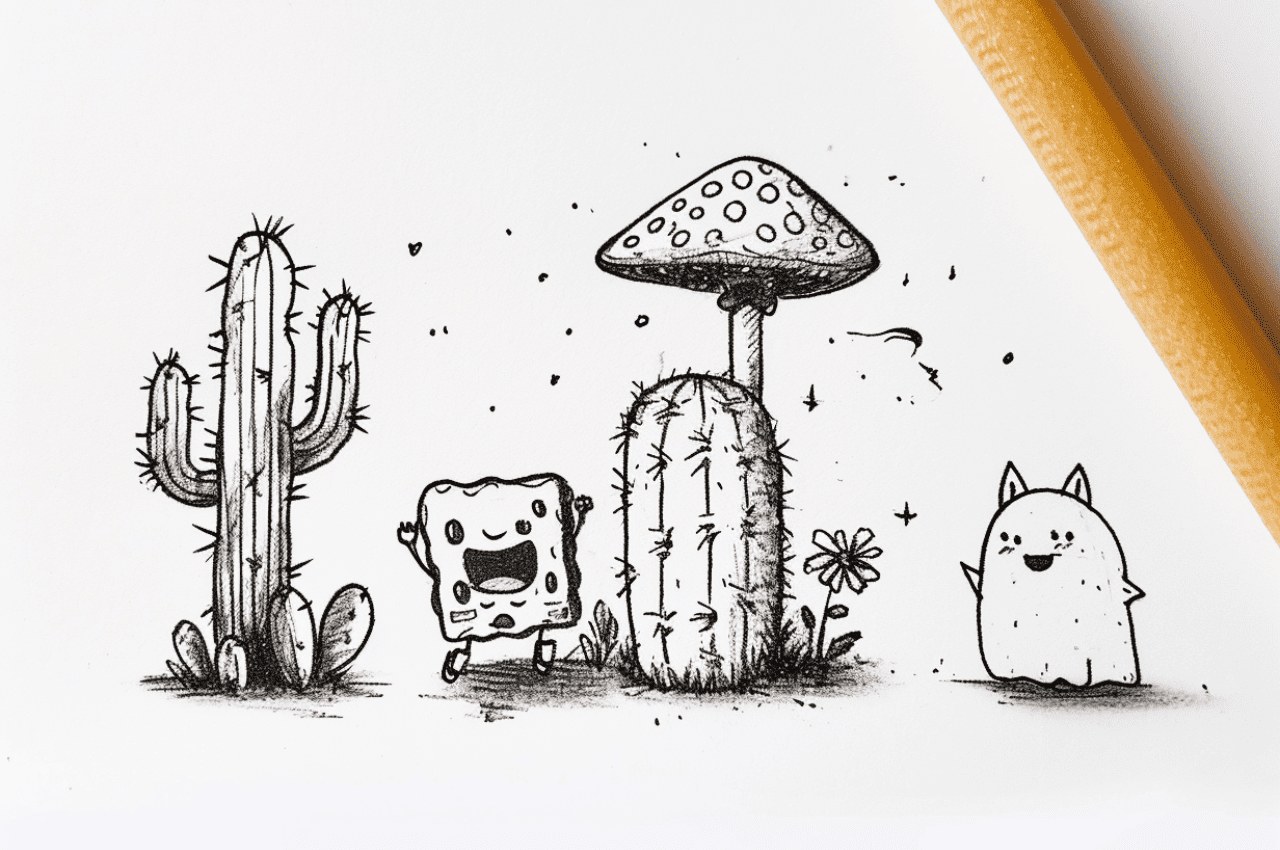
A baby dragon sitting on a pile of books is a simple concept with plenty of personality. You can make its body rounded rather than highly detailed and focus on large eyes, small wings, and a curled tail.
A ghost holding a flower, a cloud with fairy wings, or a cat wearing a wizard hat can also become fun sketching prompts. These ideas are particularly helpful when you want to practice character design while keeping the drawing approachable.
How to Make Simple Drawings Look More Adorable
The appeal of cute art often comes from small visual choices rather than complicated technique. Large eyes, rounded shapes, tiny limbs, soft curves, and expressive poses can immediately change the mood of an illustration.
Try exaggerating proportions. A character with a large head and a small body often feels more playful than one with realistic proportions. You can also experiment with facial expressions. A tiny open mouth can suggest surprise, while closed curved eyes can create a sleepy or peaceful appearance.
Adding accessories is another easy technique. A scarf, bow, hat, backpack, flower, cup, or pair of glasses can give a simple character more identity.
For random cute things to draw, consider combining two unrelated concepts. A frog astronaut, a sleepy coffee cup, or a penguin gardener becomes more memorable because the combination creates a small visual story.
Simple Drawing Prompts for a Quick Creative Session
When you cannot decide what to sketch, use a random prompt rather than waiting for inspiration. Pick an object, animal, food, or place and give it one unexpected feature.
For example, choose “cat” and add “raincoat.” Choose “cake” and add “tiny backpack.” Choose “cloud” and add “sleeping bag.” This method creates countless combinations without requiring complicated planning.
You can also use a three-part prompt system:
- Choose a subject: animal, food, object, plant, or creature.
- Choose an emotion: happy, sleepy, surprised, shy, excited, or confused.
- Choose an accessory: hat, umbrella, glasses, flower, scarf, or backpack.
Combining these categories can quickly generate new sketch ideas. It is an effective way to avoid drawing the same characters repeatedly.
Creative Ideas for Different Skill Levels
Beginners can focus on single-object doodles made from basic shapes. A smiling star, tiny mushroom, simple cat, or cupcake can be completed in just a few steps.
Intermediate artists can introduce poses, backgrounds, and interactions. Instead of drawing one character, create two characters sharing an umbrella or sitting around a tiny table.
More experienced artists can turn random cute things to draw into complete miniature scenes. Try designing a small bedroom for a bear character, a magical bakery run by rabbits, or a tiny bookstore inside a tree. These concepts allow you to practice perspective, composition, storytelling, and character design together.
Using Cute Doodles in Everyday Projects
Cute illustrations do not have to remain inside a sketchbook. Once you become comfortable with simple doodles, they can be adapted for personal creative projects.
You can use small drawings to decorate journal pages, study notes, calendars, greeting cards, handmade bookmarks, or personal planners. Digital artists can also use simple character concepts as inspiration for icons, stickers, wallpapers, and other artwork.
Another enjoyable idea is to create a themed page. For example, dedicate one page to tiny desserts, another to woodland animals, and another to miniature household objects. A consistent theme can make even simple drawings look like a carefully designed collection.
Ways to Keep Your Drawing Practice Enjoyable
Creative practice becomes easier when you remove unnecessary pressure. Not every sketch needs to become a finished artwork. Some drawings can simply be experiments.
Set a small goal, such as creating five doodles in ten minutes. Use a pencil first if you are nervous about mistakes, or use an ink pen if you want to practice confident lines. You can also revisit an old drawing later and redraw it using techniques you have learned.
Keep a list of random cute things to draw whenever an idea appears. Over time, this list can become a personal collection of drawing prompts. When you have a few free minutes, choose one without overthinking it.
Most importantly, allow imperfect drawings to exist. Creative improvement comes from repeated practice, and unfinished or awkward sketches are part of that process.
Conclusion
Random cute things to draw can turn an ordinary sketching session into an opportunity for experimentation and imagination. From expressive animals and characterful food to plants, household objects, fantasy creatures, and tiny scenes, there are countless subjects to explore.
The simplest approach is often the most effective: begin with basic shapes, add an expressive face, introduce one unexpected detail, and let the character develop naturally. You do not need advanced artistic skills to make enjoyable doodles. With regular practice and a willingness to experiment, even a few simple lines can become a memorable little illustration.
Whether you are filling a sketchbook, decorating a journal, practicing character design, or simply looking for a relaxing creative activity, keeping a collection of random cute things to draw can provide endless inspiration.